
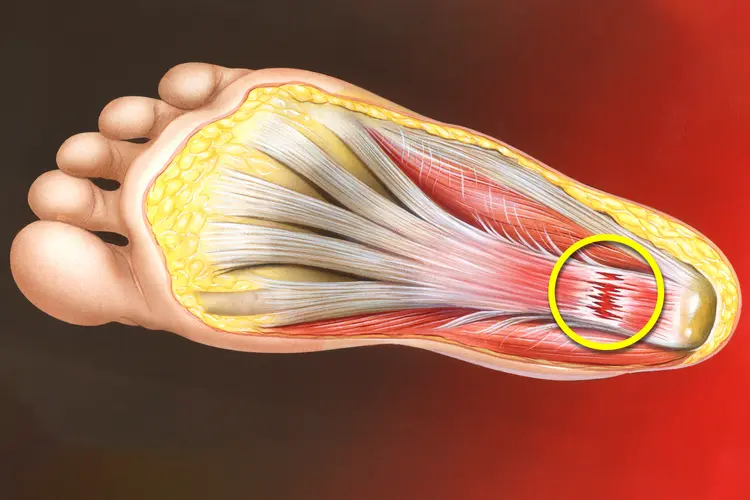

Platelet-rich plasma, commonly called PRP, uses a concentrated portion of the patient’s own blood to support healing in damaged plantar fascia tissue. Research suggests that this treatment may offer meaningful benefits for selected people with chronic plantar fasciitis, although results vary and proper diagnosis still matters.
1. Superior Long-term Pain Relief Compared to Corticosteroid Shots
Corticosteroid injections may calm pain quickly, but their benefit often fades as the short-term anti-inflammatory effect wears off. PRP usually works more gradually because it aims to support tissue recovery rather than simply suppress irritation. Clinical studies have found stronger pain improvement with PRP at several medium-term follow-up points, particularly around three to six months. A plantar fasciitis doctor may discuss this option after stretching, footwear changes, orthotics, and activity adjustments have failed to control persistent symptoms. Earlier improvement from steroids can still suit certain situations, so timing and treatment goals influence the choice.
2. Significant Improvement in Foot Function and Overall Mobility
Reduced pain matters, yet successful treatment should also help the foot handle daily movement more comfortably. Patients receiving PRP have reported improvements in walking tolerance, standing ability, and scores that measure foot and ankle function. Better mobility may allow a gradual return to work, exercise, or household tasks without the same sharp discomfort under the heel. An Athens podiatrist still considers age, activity demands, symptom duration, and other health conditions because no injection produces identical results for everyone. Progress also depends on following a sensible loading plan rather than returning too quickly to high-impact activity.
3. Measurable Reduction in Plantar Fascia Thickness on Ultrasound
Chronic plantar fasciitis often causes the fascia near its heel attachment to become thickened and uneven. Ultrasound lets a plantar fasciitis specialist measure that tissue before treatment and monitor structural changes during recovery. Several studies have reported reduced plantar fascia thickness after PRP, though the degree of improvement does not always match the patient’s pain level exactly. Imaging therefore supports the clinical evaluation instead of replacing it, since a person may feel better before the tissue returns to a more typical appearance. Comparison with the opposite foot can provide useful context when measurements fall near the borderline range.
4. Accelerated Natural Tissue Repair via Concentrated Growth Factors
PRP preparation begins with a blood draw followed by centrifugation, which separates platelets from other blood components. Concentrated platelets release growth factors and signaling proteins associated with cell activity, blood-vessel formation, and tissue repair. Once injected near the damaged fascia, the solution may encourage a stronger healing response in an area affected by long-term degeneration. That biological effect develops over time, so patients should not expect the immediate numbing or rapid pain reduction sometimes felt after a steroid injection. Controlled rehabilitation helps the recovering tissue adapt to pressure while strength and flexibility improve.
5. Lower Risk of Plantar Fascia Rupture than Steroid Injections
Repeated corticosteroid exposure can weaken connective tissue and has been associated with plantar fascia rupture and thinning of the heel’s protective fat pad. PRP does not carry the same known rupture risk because it contains material taken from the patient rather than a drug that suppresses local tissue activity. However, injection accuracy, aftercare, and activity limits still affect safety. A podiatrist in Athens AL may use ultrasound guidance to place the treatment precisely while avoiding nearby nerves, blood vessels, and healthy tissue.
6. Sustained Symptom Relief past Six to Twelve Months Post-treatment
Longer-lasting improvement is one reason PRP receives attention for stubborn heel pain. Certain trials have shown continued relief at six or twelve months, while steroid results may be stronger early and less durable later. Evidence is not perfectly consistent, partly because clinics use different platelet concentrations, preparation methods, injection techniques, and rehabilitation plans. Careful patient selection remains important, since untreated biomechanical problems or an incorrect diagnosis can limit even a well-performed procedure.
7. Minimal Adverse Effects Due to Autologous Blood Composition
Using the patient’s own blood lowers the chance of an allergic reaction or disease transmission. Temporary soreness, swelling, bruising, or stiffness can still occur near the injection site, and discomfort may increase briefly before improvement begins. Infection and nerve injury remain uncommon but possible risks with any injection. The Foot Clinic can evaluate chronic heel pain, confirm whether plantar fasciitis is the true cause, and explain whether PRP fits the patient’s symptoms, treatment history, medical needs, and recovery goals.