
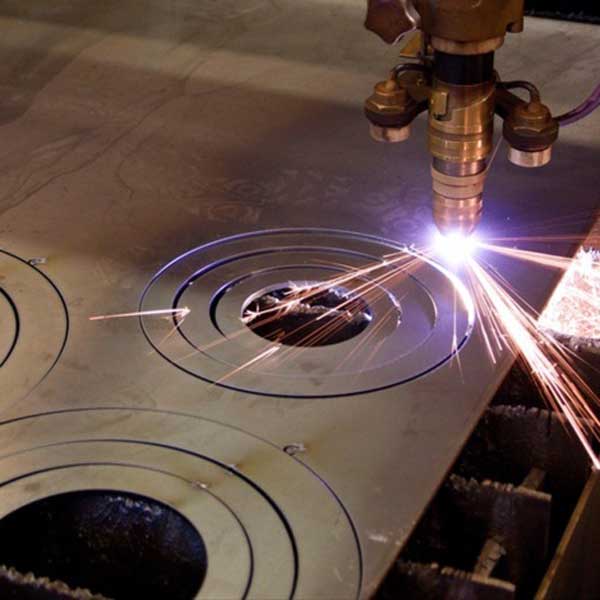

Molten metal tells the truth fast: a plasma cutter does not simply slice steel because it is hot; it works because a focused jet of ionized gas melts conductive material and blows the molten stream out of the cut. Thickness range depends on power, torch design, gas flow, material type, and whether the job demands a clean production edge or a rough severance cut.
How Cutting Amperage Determines the Practical Plate Thickness Range
Thickness starts with amperage because the arc needs enough energy to melt through the full depth of the metal. A light-duty plasma cutter may handle thin sheet metal well, while a heavier industrial system can process plate measured in inches.
Rated capacity matters more than a sales headline. Manufacturers often separate “quality cut,” “maximum cut,” and “severance cut,” and each term means something different for fabrication shops comparing a CNC plasma cutter or speaking with a CNC machine company.
Why Quality Cut Capacity Matters More Than Maximum Cut Claims
Amperage alone does not guarantee a clean result. Quality cut capacity describes the thickness a machine can cut with straighter edges, better speed, less dross, and a part that needs less grinding before welding or assembly.
Higher maximum ratings can sound impressive, yet those cuts may move slowly and leave rougher edges. A CNC plasma cutting machine used for production should be judged by the thickness it can cut repeatedly with acceptable accuracy, not only by its thickest possible pierce.
How Material Type Changes Plasma Cutter Thickness Performance
Material chemistry affects the cut because steel, stainless steel, and aluminum respond differently to heat. Mild steel usually cuts efficiently, while stainless steel and aluminum may need adjusted settings because they conduct heat differently and can change edge behavior.
Aluminum often needs more attention than many readers expect. Its heat movement can widen the cut, soften edges, or create a less tidy finish if the operator uses the wrong speed, torch height, or consumable setup.
The Role of Pierce Capacity in Real Fabrication Work
Cut charts often mention pierce capacity because starting a hole through thick plate is harder than cutting from an outside edge. Piercing sends molten metal back toward the torch, which can damage consumables if the machine is pushed past its proper range.
Feed starts, lead-ins, and edge starts can help protect the torch on thicker jobs. Shops searching for CNC companies near me should ask whether the provider understands pierce limits, not just the cutting limit printed on the equipment label.
Why Torch Height Control Improves Thick-Plate Cutting Consistency
Clean thickness performance depends on distance between the torch and the plate. Torch height control keeps that gap steady, which helps the plasma arc stay focused instead of flaring wide or dragging too close to the surface.
Rough plate, heat warp, and uneven stock can all disturb cut quality. A modern CNC plasma cutter with controlled torch motion handles those small changes better, making thicker material more predictable from the first inch to the final contour.
How Speed, Gas Flow, and Consumables Shape the Finished Edge
Pierce time, travel speed, gas pressure, and consumable condition work together like a cutting recipe. Moving too fast can leave uncut metal behind, while moving too slowly can widen the kerf and create heavy dross along the bottom edge.
Edge quality changes quickly when consumables wear out. Nozzle shape, electrode life, swirl ring condition, and air cleanliness can decide whether a plasma cutter leaves a sharp profile or a ragged edge that steals time in cleanup.
What CNC Programming Adds to Thicker Metal Cutting Accuracy
Software helps thick-plate cutting because the machine can follow programmed lead-ins, cut order, kerf offsets, and speed changes. Those details reduce heat buildup, protect small features, and keep dimensions more stable across the sheet.
Strong programming also helps avoid part movement during long cuts. A CNC plasma cutting machine can use tabs, smart sequencing, and nesting strategies so heavy components stay secure until the right moment in the fabrication cycle.
Why Shop Experience Still Decides the Best Thickness for Each Job
Operators know that thickness capacity is not a single number. A shop may cut thinner gauge material all day for brackets, then switch to heavier plate for structural parts, guards, base plates, or industrial repair components.
Consistent results come from matching the machine to the metal, the drawing, and the finish requirement. Asking the right questions about tolerances, edge cleanup, and production volume matters as much as asking how thick the machine can cut.
The Thickness Conversation Fabricators Should Have Before Production
Shops should define the real goal before ordering parts: clean weld-ready edges, fast rough cuts, detailed shapes, thick plate separation, or repeatable production components. Each goal changes the best settings and the practical thickness range. Fabricators evaluating a plasma cutter project can look to Amtec Solutions Group for guidance on thickness capability, part quality, and production flow without guessing from machine ratings alone.